

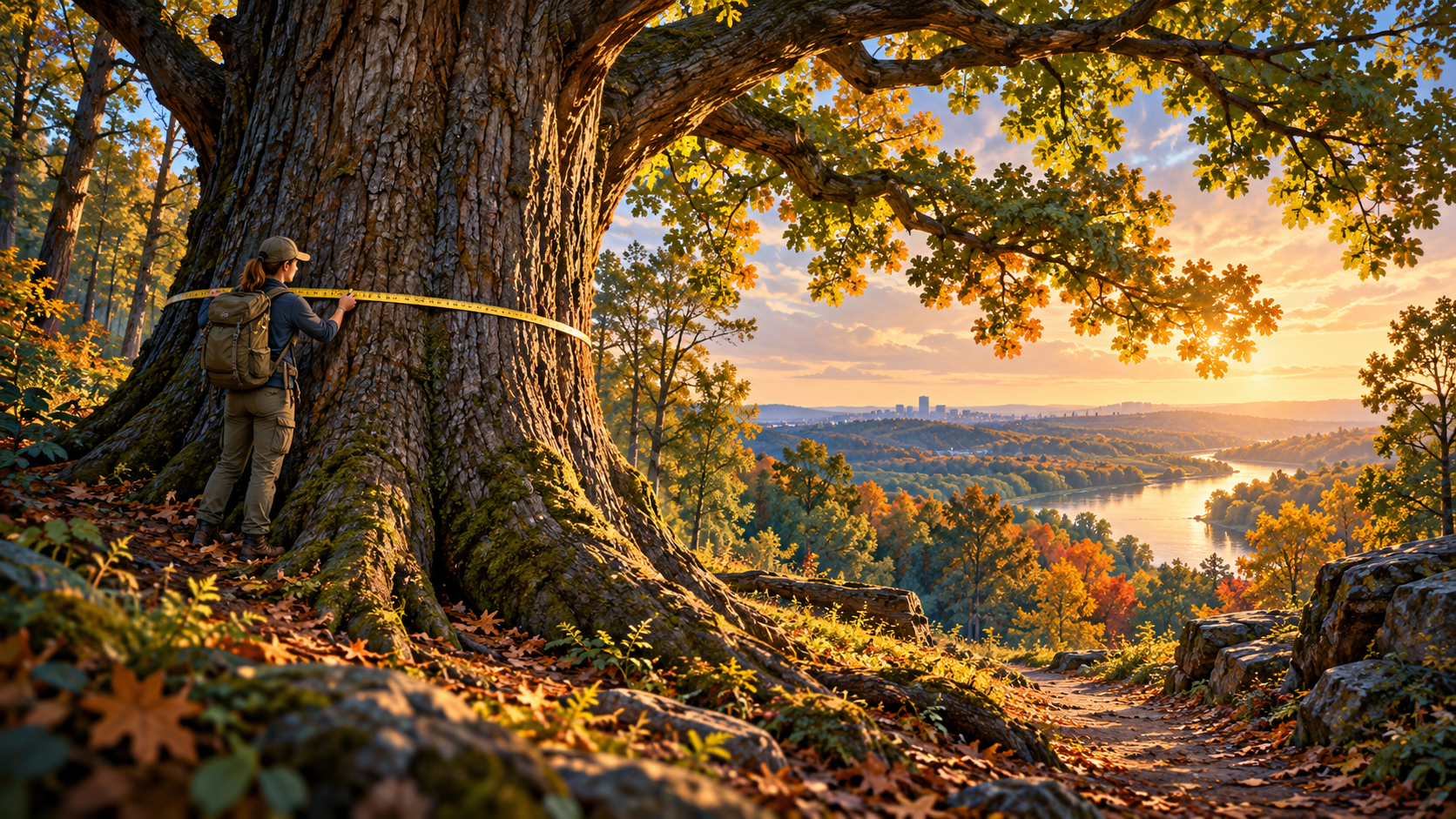
The phrase “ohio champion trees delaware county usd lewis center” mixes a tree-record topic with local search terms. A reliable answer starts by identifying the geographic area and examining the original data, rather than inventing a named programme.
The reviewed indexed ODNR listing documents a Delaware County eastern cottonwood entry. Current location access and continued champion status remain separate verification questions.
Ohio champion trees Delaware County USD Lewis Center: resolve the entities
For this query, keep three fields separate: jurisdiction, species and record status. Delaware County belongs to the Ohio context; a page about the State of Delaware is a different dataset. Lewis Center narrows interest geographically but does not establish an exact tree coordinate.
No verified institutional meaning for “USD” was identified in the reviewed material. A search phrase can contain an abbreviation without documenting the entity behind it. Adding an organisation name would create a relationship the evidence does not support.
Read the published measurements with their units
The ODNR native-tree record visible through search indexing lists Delaware County’s eastern cottonwood at 527 points, with 380 inches of trunk circumference, 122 feet of height and 102.9 feet of crown spread. These are recorded figures, not measurements made for this article.
The direct source page was not retrievable during the 28 October 2026 review. An indexed value can preserve information from a published page, but it cannot confirm that the page is current or that the tree remains in the same condition.
A simple data table should therefore include a source-status note. Do not hide “direct page unavailable” in a footnote while presenting the specimen as a newly verified current champion in the headline.
Why the units matter in a scoring calculation
Illinois Extension describes the scoring method as circumference plus height plus a quarter of average crown spread, with the published inch-and-foot conventions. The score is a programme comparison measure, not a physical length you can read in one unit.
A hypothetical example makes the point: 160 inches of circumference, 70 feet of height and 60 feet of spread yield 245 points. Converting the measurements into metres and adding them without changing the scoring method would not produce the same recognised score.
Also keep circumference and diameter in separate fields. A spreadsheet headed “DBH” should not silently contain a circumference value. Label the actual measurement and preserve the source’s units before doing any conversion.
Build a small evidence log
For each candidate tree, record the scientific name, county, reported dimensions, source URL and the date you accessed it. Add the measurement date if available. Mark unknown fields as unknown rather than filling them with assumptions from a nearby photograph.
If a future source gives different values, compare measurement dates and methods first. Growth, remeasurement, corrections and a change in candidate tree can all require investigation. A changed number is a question to resolve, not automatic proof that one page is dishonest.
The local Master Gardener material can provide educational context and routes to tree resources. For a formal record, however, use the responsible programme’s current confirmation.
Our articles on checking online information and verifying updates discuss related evidence habits. The same principle applies to a forestry database: a precise number still needs a date, a definition and a source.
Frequently asked questions
Does search indexing prove current champion status?
No. It supports what a published page recorded, with limits on freshness and present status.
Can circumference be entered as diameter?
No. They are different measurements and must be labelled separately.
Why not convert everything before scoring?
Use the programme’s defined scoring conventions. Arbitrary unit changes alter the result.
What does USD identify here?
No institutional meaning was verified in the reviewed sources.
What should an evidence log contain?
Species, jurisdiction, measurements and units, source, access date and known record limitations.
